ABDM Guidelines: What Hospitals, Doctors & Software Companies Must Know
The Ayushman Bharat Digital Mission (ABDM) is a transformative initiative by the Government of India aimed at building a national digital health ecosystem. It enables seamless, secure, and interoperable exchange of health data across stakeholders—patients, hospitals, doctors, and digital health platforms.
With increasing adoption, understanding ABDM compliance is no longer optional—it is essential.
What is ABDM?
ABDM provides a digital framework that includes:
-
ABHA (Ayushman Bharat Health Account) – Unique patient ID
-
Health Facility Registry (HFR) – Registry of hospitals and labs
-
Healthcare Professional Registry (HPR) – Registry of doctors and professionals
-
Health Information Exchange & Consent Manager (HIE-CM) – Secure data sharing with patient consent
ABDM Guidelines for Hospitals
Hospitals are the backbone of ABDM adoption. To become ABDM-compliant, they must:
1. Register on Health Facility Registry (HFR)
-
Mandatory to get a unique facility ID
-
Ensures discoverability across India
2. Enable ABHA Integration
-
Hospitals must allow:
-
ABHA creation
-
ABHA linking with patient records
-
-
Helps unify patient history across providers
3. Implement Consent-Based Data Sharing
-
No data sharing without patient approval
-
Must integrate with HIE-CM (Consent Manager)
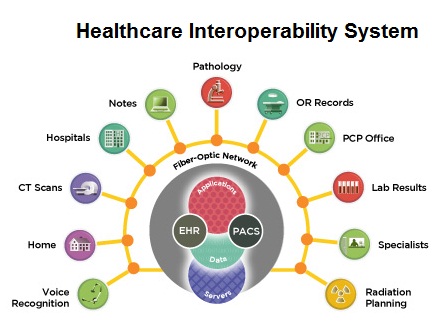
4. Upgrade HIS / PACS / EMR Systems
-
Systems must support:
-
ABDM APIs
-
FHIR standards (HL7 FHIR)
-
-
Ensure interoperability
5. Ensure Data Security & Privacy
-
Follow IT Act & NDHM data policies
-
Encryption and audit trails are essential
6. Participate as HIP & HIU
-
HIP (Health Information Provider) → shares data
-
HIU (Health Information User) → consumes data
ABDM Guidelines for Doctors
Doctors play a critical role in digitizing healthcare workflows.
1. Register on Healthcare Professional Registry (HPR)
-
Required to obtain a verified digital identity
-
Builds trust and credibility
2. Use ABDM-Enabled Digital Tools
-
Prefer EMR/EHR systems that support ABDM
-
Enables easy access to patient records (with consent)
3. Generate Digital Health Records
-
Prescriptions, reports, discharge summaries should be:
-
Digital
-
Structured (FHIR compliant)
-
4. Respect Patient Consent
-
Access patient records only after approval
-
Transparency is key
5. Support Telemedicine & e-Prescriptions
-
Align with digital healthcare trends
-
Ensure compliance with Indian telemedicine guidelines
ABDM Guidelines for Software Companies
Software vendors (like HIS, RIS, PACS, EMR providers) must align closely with ABDM standards.
1. ABDM Sandbox Integration
-
Register and test APIs in ABDM sandbox
-
Mandatory before production deployment
2. Implement ABDM APIs
Key integrations include:
-
ABHA creation & verification
-
Consent Manager APIs
-
Health data exchange APIs
3. Follow FHIR Standards
-
Use HL7 FHIR for structured data exchange
-
Ensure compatibility with national ecosystem
4. Get ABDM Certification
-
Required to be officially listed as ABDM-compliant
-
Enhances trust among hospitals and users
5. Ensure Data Privacy & Security
-
End-to-end encryption
-
Role-based access control
-
Audit logging
6. Build Scalable Cloud Architecture
-
ABDM ecosystem demands:
-
High availability
-
API scalability
-
Secure cloud infrastructure
-
Key Roles in ABDM Ecosystem
| Role | Description |
|---|---|
| HIP | Shares patient data (Hospitals, Labs) |
| HIU | Consumes patient data (Doctors, Apps) |
| HIE-CM | Manages consent |
| ABHA | Unique patient identifier |
Why ABDM Matters
-
Improves continuity of care
-
Reduces duplicate tests
-
Enables pan-India health records access
-
Boosts telemedicine & digital healthcare
-
Creates opportunities for health-tech innovation
Common Challenges
-
Legacy systems not FHIR-compliant
-
Lack of awareness among small clinics
-
Integration complexity
-
Data privacy concerns
Final Thoughts
ABDM is not just a government initiative—it is the foundation of India’s digital healthcare future.
Hospitals must modernize systems, doctors must adopt digital workflows, and software companies must build interoperable, secure, and scalable solutions.
Early adopters will gain a strong competitive advantage in the rapidly evolving healthcare ecosystem.